

Introduction
In espresso, the filter basket is often overlooked.
It’s treated as a simple metal part—rather than a core element of the extraction system.
But in modern specialty coffee, the basket plays a decisive role.
It directly affects extraction efficiency, flow resistance, flavor clarity, and consistency.
Choosing a filter basket isn’t about hardware.
It’s about choosing the right extraction approach.
Key Variables That Define Coffee Extraction
Before selecting a filter basket, it is essential to understand the core variables that shape espresso flavor, mouthfeel, and consistency:
| Variable | Function | Impact on Flavor |
|---|---|---|
| Grind size | Determines puck resistance and water flow through the coffee bed | Coarser grind → faster extraction, brighter acidity; Finer grind → slower extraction, increased sweetness and concentration |
| Flow rate | Controls how efficiently soluble coffee compounds are extracted | Faster flow → higher extraction efficiency, lower concentration; Slower flow → lower efficiency, higher concentration |
| Pressure | Drives water through the puck, especially critical in espresso | Higher pressure → better flavoring emulsions, fuller body and richness; Lower pressure → reduced emulsification and a lighter body. |
| Temperature | Influences dissolution speed | Higher temperature → increased extraction efficiency; Lower temperature → reduced extraction |
| Extraction time | Total contact time between water and coffee | Shorter time → brighter, thinner cups; Longer time → increased bitterness, heavier body |
Even with these variables dialed in, espresso can still be inconsistent.
That’s where filter basket design becomes critical.
Why the filter Basket Matters
A precision basket helps control water flow, pressure distribution, and puck integrity—making flavor outcomes far more predictable.
A well-designed basket contributes by:
1. Improving Extraction Efficiency
Precision hole patterns ensure even water distribution across the puck, minimizing fast-flow zones and maximizing extraction potential from every gram of coffee.
2. Enhancing Shot-to-Shot Consistency
Basket depth and uniform perforation help stabilize pressure, flow rate, and concentration, significantly reducing flavor variation between shots.
3. Reducing Channeling
Channeling occurs when water finds weak paths through the puck, causing uneven over- and under-extraction. Precision baskets reduce this risk, allowing acidity, sweetness, and bitterness to present in balance.
4. Unlocking New Flavor Pathways
Hole density, geometry, and basket depth determine which extraction strategies are possible. Rather than simply “changing flavor,” baskets enable entirely different extraction approaches—some of which challenge traditional espresso conventions.
Examples:
-
Medium–dark roasts → Fine grind + high pressure + ultra-low flow (“slow extraction”)
With dense perforation, these roasts can move beyond the classic 25–35 s recipe.
Slower flow (<1 ml/s), finer grinds, and longer timing (40–45 s from first drip) deliver higher sweetness, denser crema, and deeper structure. -
Light roasts → Coarse grind + high flow (“reverse extraction”)
Ultra-fine grinding often causes harsh acidity and flavor congestion.
A counterintuitive approach — coarser grinds, faster flow(3–4 g/s),and higher brew ratios produce brighter, cleaner, and more open flavors.
💡 Summary:
A filter basket isn’t just an accessory — it’s a precision tool that shapes extraction and flavor. The right basket improves consistency and expands extraction possibilities, and delivers exceptional value with minimal investment.
Why Different Coffees Require Different Baskets
Roast level, grind size, and extraction style all influence how water behaves within the coffee bed—and therefore how flavor is expressed.
-
Light roasts favor higher flow rates to highlight acidity and clarity
-
Medium roasts benefit from balanced, stable extractions
-
Dark roasts respond best to slower, high-pressure extractions that emphasize sweetness and body
Filter basket depth, capacity, hole count, and layout directly affect:
-
Extraction stability
-
Flow–pressure relationships
-
Extraction evenness
-
Flavor profile and mouthfeel
Unfortunately, many baskets on the market are sold without guidance, leaving users to experiment blindly.
BOOKOO × PCL baskets take a different approach:
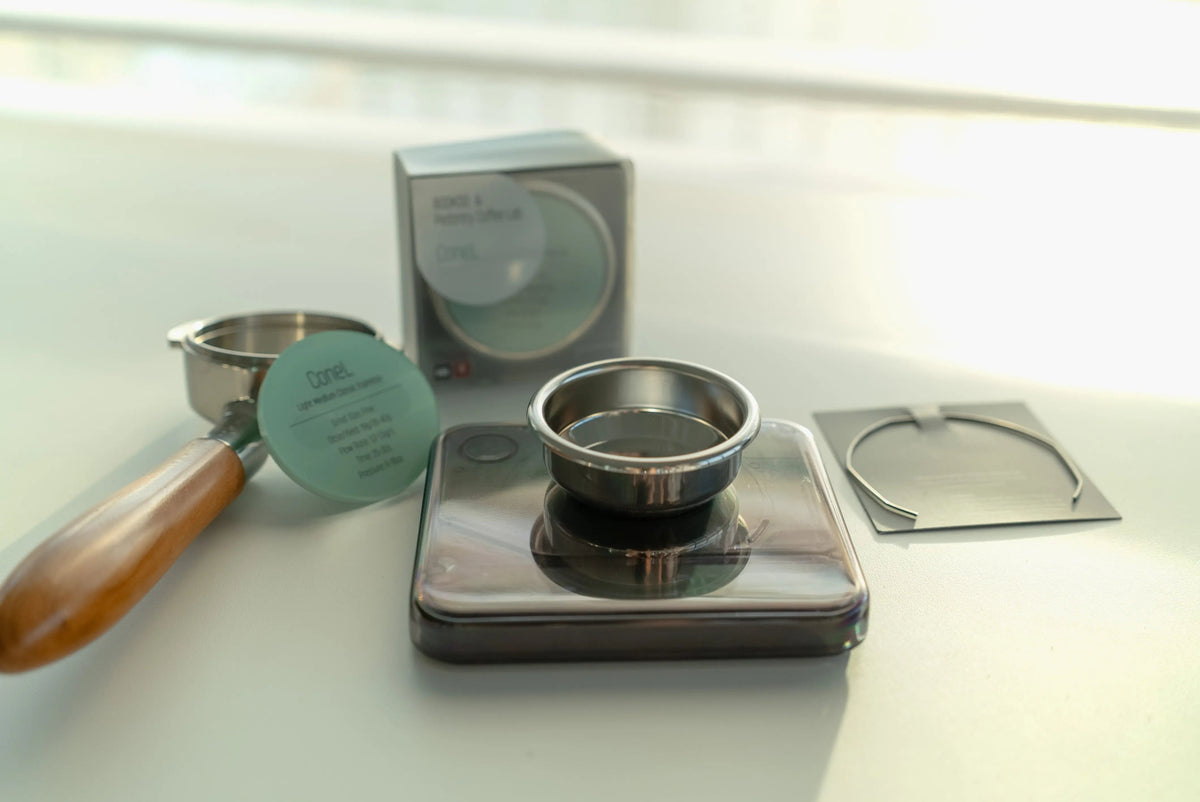
Each model includes clear usage guidelines that match grind size, dose, and flow rate to light, medium, and dark roasts—allowing both enthusiasts and professional baristas to upgrade cup quality with confidence and minimal cost.
In short, it’s not about buying the most expensive basket, nor about finding a single “do-it-all” solution. It’s about choosing the right basket to achieve precision, stability, and control in every cup.
How to Choose the Right Filter Basket for You
Start with one question:
What kind of flavor do you want in the cup?
Different basket designs unlock different extraction paths.

Cylin
For those pursuing maximum extraction efficiency, especially with medium to dark roasts:
-
Design: Straight walls, 24 mm depth, 57 mm base diameter, high-density perforation
-
Strengths:
-
Excellent for high-pressure slow extractions with dark roasts
-
High sweetness, clean finish, minimal fines in the cup
-
High extraction efficiency and uniformity for medium–light SOE espresso
-
-
Example usage: Ultra-low-flow slow extractions for medium–dark roasts or classic SOE espresso.
Click the picture below for more details:

ConeL
For daily ease of use with reliable consistency:
-
Design: Tapered upper and lower walls, 24 mm depth, 48 mm base diameter, dense perforation
-
Strengths:
-
User-friendly workflow
-
Strong consistency across a wide roast range
-
-
Example usage: Everyday espresso or Americano from medium–light SOE to dark roast blends.
Click the picture below for more details:
NeoDiscovery
For milk-based drinks and fuller-bodied flavor profiles:
-
Design: Slightly curved lower sidewall, 26 mm depth, concentric but intentionally irregular sparse perforation
-
Strengths:
-
Stable extraction with coarser grinds
-
Rich flavor, balanced acidity, and pronounced body
-
-
Example usage: Milk drinks at home or in cafés, producing round and full-bodied cups.
Click the picture below for more details:
HyperEx
For light-roast lovers seeking bright acidity through high-flow extraction:
-
Design: Slightly curved lower sidewall, 26 mm depth, sparse matrix-style perforation
-
Strengths:
-
Supports very coarse grinds and high brew ratios
-
High flow, uniform extraction, thick body
-
Stronger and more expressive than pour-over
-
-
Example usage: Allongé / HyperEx-style extractions with light roasts, delivering vivid acidity and aromatic clarity.
Click the picture below for more details:

Other Key Factors to Consider When Choosing a Basket
-
Wall geometry: Straight walls favor maximum extraction and pressure-driven flavor; tapered or curved designs enhance stability across roast levels
-
Hole density and size: Dense perforation suits high-pressure slow extraction; sparse patterns support medium-to-high flow
-
Depth and capacity: Deeper baskets allow higher doses and generally offer greater extraction stability
Conclusion
A filter basket doesn’t just influence flavor—it defines extraction stability.
Only by understanding basket differences and aligning them with roast level, grind size, flow rate, and serving goals can you consistently achieve your ideal cup.
If you want to avoid unnecessary trial and error while achieving precise, repeatable results, a system-based precision basket—such as the BOOKOO × PCL series—is the optimal choice.
What you gain is not just a basket, but a fully executable extraction framework—one that brings every cup closer to your ideal flavor with confidence and ease.
Share:
Coffee Filter Basket Guide: Choosing the Best One for Your Brewer
How to Choose a Bluetooth Coffee Scale for Espresso & Pour-Over